
A Narrative Review of the Pathophysiology of Mucormycosis Infection Among COVID-19 Patients in India: Epidemiology and Clinical Implications
DOI:
https://doi.org/10.21106/ijtmrph.409Keywords:
- Mucormycosis,
- COVID-19,
- Diabetes Mellitus (DM),
- Immunosuppression,
- Steroids,
- Tocilizumab (TCZ) India
Abstract
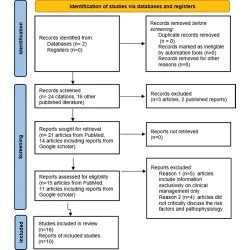
Background and Objective: During the second COVID-19 wave in India (April to May 2021), mucormycosis has affected the ‘recovering’ and the ‘recovered but vulnerable’ COVID-19 patients across the country. This review synthesizes information on the risk factors and pathophysiology of mucor infection among COVID-19 patients, which in turn supplements existing information from public health and clinical sciences. The study objective includes analyzing the morbidity of mucor infection and its pathophysiological mechanism, during India’s second wave of the COVID-19 pandemic. Methods: We conducted a systematic literature search of PubMed and Google Scholar databases, using the following text terms: ‘COVID-19,’ ‘SARS-CoV-2,’ ‘mucormycosis,’ and ‘zygomycosis.’ We identified 24 citations and 16 other published literature which described mucormycosis in association with COVID-19. The relevant literature was analyzed for findings on the risk factors of mucor infection and its outcome among individuals with COVID-19. Results: The risk factors for mucor infection include diabetes mellitus, immunosuppression (for example, the administration of steroids/monoclonal antibodies/broad-spectrum antibiotics), prolonged stay in the intensive care unit, co-morbidities such as malignancy or post-transplantation, and prophylactic therapy with voriconazole (generic anti-fungal). The second wave of COVID-19 in India was more severe due to the increased occurrence of systemic inflammation and coagulopathy, which can cause direct damage to the blood vessels resulting in injuries to organs such as the liver, kidney, and heart. Conclusion and Implications for Translation: The increased incidence of mucormycosis during the second wave of the COVID-19 pandemic in India (April to May 2021) was due to a combination of immunocompromising effects of corticosteroids, microangiopathy of diabetes, and peripheral microthrombi among COVID-19 patients. The indiscriminate usage of steroids for treating COVID-19 disease seems to be the likely cause, including the use of immunomodulatory drugs such as interleukin 6 inhibitors like tocilizumab (TCZ) for patients with severe COVID-19. Clinical practices should adopt a judicious approach towards the prescription of steroids and monitoring blood sugar for all COVID-19 patients admitted to the hospital as well as those isolated at home (even during the post-recovery period). The high mortality rate of mucor infection demands appropriate primary prevention measures, as well as early diagnosis and treatment modalities for improving patient survival.
Downloads
Similar Articles
- Gopal K Singh, Hyunjung Lee, Romuladus E Azuine, Increasing Trends in Physical and Mental Health Problems among US Workers in Different Job Sectors During the COVID-19 Pandemic , Vol. 5 No. 2 (2021): The International Journal of Translational Medical Research and Public Health (IJTMRPH)
- Leah Claus, Sara S Jarvis, Building Trust: Strategies for Recruiting Underrepresented Populations in Research during the COVID-19 Pandemic , Vol. 7 No. 1 (2023): The International Journal of Translational Medical Research and Public Health (IJTMRPH)
- Uksim Qadri, Bashir Ahmad Fomda, Saleem Javaid Wani, Shugufta Roohi, Sanam Rasool Wani, Hepatitis A and E: Prevalence, Epidemiology and Co-infection among Patients with Acute Viral Hepatitis , Vol. 9 No. Continuous (2025): The International Journal of Translational Medical Research and Public Health (IJTMRPH)
- Gopal K Singh, Hyunjung Lee, Romuladus E Azuine, Growing Job-Related Income Losses, Increasing Social Inequalities, and Physical and Mental Health Impact During the COVID-19 Pandemic, United States, April – December 2020 , Vol. 5 No. 2 (2021): The International Journal of Translational Medical Research and Public Health (IJTMRPH)
- Abhijit Dey, Rajat Basu, Poulami Basu, Simran Keshri, Bandita Sengupta, Sandip Roy, Prevention Versus Treatment: Barriers to Tuberculosis Prevention and Treatment in Urban Areas , Vol. 9 No. Continuous (2025): The International Journal of Translational Medical Research and Public Health (IJTMRPH)
- Gopal K. Singh, Hyunjung Lee, Romuladus E. Azuine, Trends and Socioeconomic, Demographic, and Behavioral Determinants of Kidney Disease Prevalence among African Americans in the United States, 1997–2021 , Vol. 9 No. Continuous (2025): The International Journal of Translational Medical Research and Public Health (IJTMRPH)
- Anagha Lokhande, Improving Reproductive and Maternal Healthcare Uptake in India: An Evaluation of Project Ujjwal Public-Private Partnership Program , Vol. 7 No. 2 (2023): The International Journal of Translational Medical Research and Public Health (IJTMRPH)
- Deepa Dongarwar, Brisa Y Garcia, Sitratullah O Maiyegun, Korede K Yusuf, Hamisu M Salihu, COVID-19 Early Vaccination Rates and Gross Domestic Product Per Capita , Vol. 5 No. 1 (2021): The International Journal of Translational Medical Research and Public Health (IJTMRPH)
- Gopal K Singh, Shanita D Williams, Hyunjung Lee, Elijah K Martin, Michelle Allender, Christine T Ramey, Trends in Physical and Mental Health, Mortality, Life Expectancy, and Social Inequalities Among American Indians and Alaska Natives, 1990-2019 , Vol. 5 No. 2 (2021): The International Journal of Translational Medical Research and Public Health (IJTMRPH)
- Chisara Sylvestina Okolo, Adeola Olanrewaju Oluboyo, Celine Ijeoma Okolo, Akinloye Bankole Oyetunde, Ifeoma Evelyn Ezeukwu, Sickle Cell Disease (SCD) and Blood Transfusion: Prevalence of Alloantibodies and Red Cell Antigens among Multiply Transfused Individuals with SCD in Selected Tertiary Health Institutions in Abuja, Nigeria , Vol. 10 (2026): The International Journal of Translational Medical Research and Public Health (IJTMRPH)
You may also start an advanced similarity search for this article.
Published
How to Cite
Issue
Section
License
Copyright © 2022 Vinod K Ramani, Radheshyam Naik. Published by Global Health and Education Projects, Inc., USA.

This is an open-access article distributed under the terms of the Creative Commons Attribution-NonCommercial-ShareAlike 4.0 International License , which permits others to remix, transform, and build upon the work non-commercially, provided the original author is credited and the new creations are licensed under the same terms.



 .
.

