Hepatitis A and E: Prevalence, Epidemiology and Co-infection among Patients with Acute Viral Hepatitis
 MD, Shugufta Roohi1MD, Sanam Rasool Wani1DNB

*Corresponding author: Bashir Ahmad Fomda, MD, Department of Microbiology, Sher-I-Kashmir Institute of Medical Sciences, Srinagar, Jammu and Kashmir, India. phone: 9419001701 bashirfomda@gmail.com
-
Received: ,
Accepted: ,
Abstract
Background and Objectives
Hepatitis A and E present significant public health dilemmas contributing to high morbidity and mortality rates, particularly in developing nations. Both viruses spread through the fecal-oral route, resulting in a range of symptoms, from asymptomatic infections to severe acute viral hepatitis (AVH). Given the seriousness of these pathogens and the scarcity of available data, we undertook this study to determine the seroprevalence, epidemiological patterns, seasonal changes, and instances of coinfection involving hepatitis A virus (HAV) and hepatitis E virus (HEV) in patients with AVH.
Methods
This retrospective study was conducted in a tertiary care hospital located in North India. Blood samples from patients exhibiting symptoms consistent with AVH were analyzed for anti-HAV and anti-HEV immunoglobulin M (IgM) using commercially available enzyme-linked immunosorbent assay (ELISA) kits. A total of 3,363 patient samples were analyzed.
Results
The ELISA for anti-HAV IgM yielded a positivity rate of 20.3%, while only 0.6% tested positive for anti-HEV IgM. Among those with positive HAV serology, 41.2% were under 10 years old, followed by 30.9% in the 11–20-year age cohort. Conversely, the majority of HEV-positive cases (47.6%) were found within the 21–30-year age group. Both viruses demonstrated a marked increase during the winter and monsoon seasons. There is a higher seroprevalence of hepatitis A as compared to hepatitis E, and a seasonal surge in both cases was seen in this region of Northern India during the monsoon and winter months.
Conclusion and Implications for Translation
The diagnosis of acute viral hepatitis (AVH) requires serological validation to identify viral agents, revealing high seroprevalence of hepatitis A in Northern India with seasonal increases during monsoon and winter. Coinfections with hepatitis A (HAV) and E (HEV) are low, but their implications need further study. Public health strategies should focus on safe drinking water access, improved sewage systems, hygiene education, routine HAV immunization, and efficient outbreak detection to reduce morbidity and prevent epidemics in high-risk areas.
Keywords
Acute Viral Hepatitis
Coinfection
Hepatitis A
Hepatitis E
Kashmir
India
INTRODUCTION
Background of the Study
Viral hepatitis impacts over 300 million people globally, yet the vast majority remain undiagnosed or lack access to necessary treatment. Each day, approximately 3,500 lives are lost to liver disease due to viral hepatitis worldwide.[1] The primary pathogens responsible for viral hepatitis are hepatitis A virus (HAV), hepatitis B virus, hepatitis C virus (HCV), hepatitis D virus, hepatitis E virus (HEV), and, in some cases, the dengue virus.[2,3] Of these, HAV and HEV, non-enveloped RNA viruses of the Hepatovirus genus and Hepeviridae family, respectively, pose significant public health challenges, particularly in developing nations like India.[4,5] Transmission of both HAV and HEV occurs predominantly through the fecal-oral route, often through consumption of contaminated food, water, or through direct contact with infected individuals. Infections may range from asymptomatic or subclinical presentations to cases of acute viral hepatitis (AVH), with severe cases potentially resulting in death. Pregnant women infected with HEV are at a particularly heightened risk, with mortality rates reaching up to 20–25% in the third trimester.[5] India has witnessed an increasing prevalence of HAV, HEV, and HAV-HEV co-infections, with periodic outbreaks posing serious health threats. Such co-infections frequently lead to acute liver failure (ALF) with a high mortality rate in both children and adults.[6] Notably, HAV and HEV have a history of epidemic outbreaks, often affecting young adults. Major HAV outbreaks have been recorded in regions such as Delhi, Kerala, and Shimla, while HEV epidemics have affected areas including Kashmir Valley, Kanpur, and Satara district in Maharashtra.[7] Although comprehensive data on the disease burden in India remain limited, existing literature indicates that HAV accounts for 10–30% of acute hepatitis cases and 5–15% of ALF cases. Similarly, HEV is responsible for 10– 40% of acute hepatitis cases and 15–45% of ALF cases.[6]
Objectives of the Study
In this study, ‘The Strengthening of the Reporting of Observational Studies in Epidemiology guidelines[8] were followed to present the findings of a hospital-based investigation examining the seroprevalence, seasonal trends, and rates of HAV and HEV co-infections among suspected enteric hepatitis patients. Our analysis also considers variations in age and gender distribution.
METHODS
This retrospective study was conducted from January 2023 to June 2024 in the Department of Microbiology at a tertiary care teaching hospital in North India that serves as a major referral center for AVH cases across the UT of Jammu and Kashmir. As such, it receives a diverse patient population from various geographic and socioeconomic backgrounds, which enhances the representativeness of the symptomatic cases in the region.
Sample Size
Given the study’s retrospective nature and the objective of assessing seroprevalence and epidemiological trends of HAV and HEV in the catchment area, no formal sample size calculation was performed before data collection. Instead, the large sample size enhances the generalizability and statistical power of the study, ensuring adequate representation across age groups, genders, and seasonal variations, and increasing the likelihood of capturing low-prevalence events such as HEV infection and co-infection rates. Figure 1 gives the geographical distribution of the areas from which samples were received during the study period.
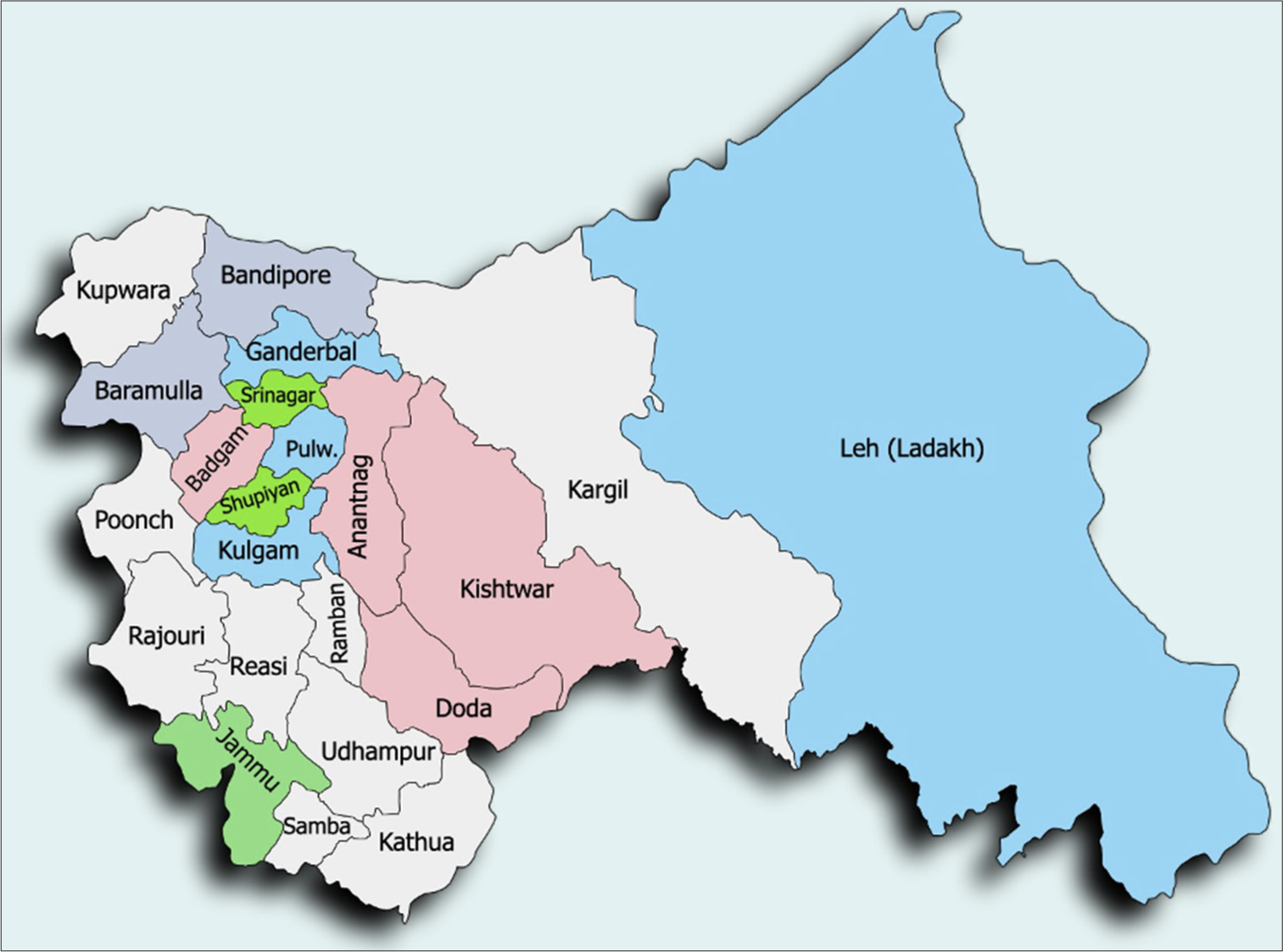
- Geographical distribution of cases enrolled in the study from the UT of Jammu and Kashmir and Ladakh.
Inclusion Criteria
Blood samples from symptomatic patients of all ages and both sexes presenting with symptoms of AVH, including fever, jaundice, hepatomegaly, and abnormal liver function test results, were included in the study.
Exclusion Criteria
Hemolyzed and insufficient blood samples were excluded, and repeat samples were also excluded from the study.
Following collection, blood samples were centrifuged at 1000 rpm for 5 min to separate serum, which was then analyzed for anti-HAV immunoglobulin M (IgM) and anti-HEV IgM using commercially available GENLISATM HAV and HEV IgM enzyme-linked immunosorbent assay (ELISA) test kits manufactured in India by Krishgen Pudgala LLP. The tests were conducted according to the manufacturer’s guidelines provided with the ELISA kits. Positive and negative controls provided with the kits were run for test validation as per instructions. Internal quality control was established by testing known positive samples, and ELISA testing was done on patient samples each time.
Study Variables
The following variables were collected and analyzed in this study:
(i) Age: Treated as a categorical variable, grouped into five intervals: 0–10 years, 11–20 years, 21–30 years, 31–40 years, and >40 years. (ii) Gender: Recorded as male or female, based on the information documented in laboratory requisition forms at the time of sample submission. (iii) Geographic location: Patients were categorized according to their district of residence within the Union Territory of Jammu and Kashmir and Ladakh. (iv) Season: Seasonal classification was based on the local climate: Winter: December– February, Spring: March, Summer: April–June, Monsoon: July–September, and Autumn: October–November. (v) Serological outcome: The primary outcome variables were seropositivity for anti-HAV IgM and anti-HEV IgM. Results were recorded as binary outcomes (positive or negative), based on the ELISA kit manufacturer interpretation criteria. (vi) Co-infection status: Defined as simultaneous positivity for both anti-HAV IgM and anti-HEV IgM in the same patient sample. These variables were used in bivariate analyses to identify demographic and temporal associations with HAV and HEV infections.
Statistical Analysis
Comparison of categorical variables was performed with the Chi-square test using IBM Statistical Package for the Social Sciences Statistics for Windows, Version 29.0 (IBM Corp., Armonk, NY, USA).
RESULTS
Sociodemographic Characteristics
Over an 18-month period, a total of 3,363 patient samples exhibiting symptoms of AVH were enrolled in the study and tested for anti-HAV and anti-HEV IgM using IgM antibody capture (MAC) ELISA. The demographic characteristics of the patients are presented in Table 1.
| Parameter | Test Performed | |||||||
|---|---|---|---|---|---|---|---|---|
| Anti-HAV IgM ELISA | Anti-HEV IgM ELISA | |||||||
| Negative (n%) | Positive (n%) | 95% CI | P-value | Negative (n%) | Positive (n%) | 95% CI | P-value | |
| Age group (years) | ||||||||
| 0–10 | 171 (6.3) | 291 (42.4) | 38.3–46.6 | <0.001 | 458 (13.7) | 1 (4.8) | 0.85–23.7 | 0.609 |
| 11–20 | 230 (8.5) | 206 (30) | 25.7–34.7 | 436 (13 | 1 (4.8) | 0.85–23.7 | ||
| 21–30 | 979 (36.5 | 110 (16) | 13.3–19.0 | 1077 (32) | 10 (47.6) | 27.7–68.3 | ||
| 31–40 | 588 (21.9) | 39 (5.6) | 4.0–7.6 | 626 (18.7) | 3 (14.3) | 4.9–34.2 | ||
| >41 | 710 (26.5) | 39 (5.7) | 4.1–7.7 | 745 (22.2) | 6 (28.6) | 13.3–50.9 | ||
| Gender | ||||||||
| Female | 1616 (60.3) | 307 (44.8) | 41.7–47.9 | <0.001 | 1911 (57.1) | 11 (52.4) | 30.4–73.6 | 0.665 |
| Male | 1062 (39.7) | 378 (55.1) | 52–58 | 1431 (42.8) | 10 (47.6) | 26.4–69.6 | ||
| District | ||||||||
| Anantnag | 170 (5) | 39 (5.6) | 4.1–7.6 | 0.662 | 205 (6) | 4 (19) | 7.7–40.0 | 0.767 |
| Budgam | 127 (0.3) | 37 (5.4) | 4.0–7.5 | 164 (4.8) | 0 | 0–2.3 | ||
| Bandipora | 156 (4.6) | 41 (6) | 4.0–8.1 | 195 (5.7) | 2 (9.5) | 2.6–28.9 | ||
| Baramulla | 232 (6.8) | 41 (6) | 4.5–8.0 | 269 (7.9) | 4 (19) | 7.7–40.0 | ||
| Doda | 22 (0.6) | 4 (0.5) | 1.4–12.3 | 26 (0.7) | 0 | 0–13.2 | ||
| Ganderbal | 864 (25.6) | 162 (23.6) | 20.6–26.8 | 1022 (30.3) | 4 (19) | 7.7–40.0 | ||
| Jammu | 71 (2.1) | 10 (1.4) | 0.8–2.6 | 81 (2.4) | 0 | 0–20.6 | ||
| Ladakh | 14 (0.4) | 2 (0.3) | 0.5–10.3 | 16 (0.4) | 0 | 0–20.6 | ||
| Kishtwar | 16 (0.4) | 0 | 0–17.1 | 16 (0.4) | 0 | 0–17.1 | ||
| Kulgam | 71 (2.1) | 11 (1.6) | 0.9–2.9 | 80 (2.3) | 1 (4.7) | 0.8–22.7 | ||
| Pulwama | 147 (4.3) | 20 (3) | 2.0–4.7 | 167 (4.9) | 0 | 0–2.2 | ||
| Shopian | 48 (1.4) | 9 (1.3) | 0.7–2.5 | 57 (1.6) | 0 | 0–6.3 | ||
| Srinagar | 741 (22) | 309 (45) | 41.5–48.5 | 1044 (31) | 6 (28.5) | 13.2–50.8 | ||
| Total | 3363 | 2678 (79.6) | 685 (20.3) | 3342 (99) | 21 (1) | |||
HAV: Hepatitis A virus, HEV: Hepatitis E virus, IgM: Immunoglobulin M, ELISA: Enzyme-linked immunosorbent assay, CI: Confidence interval.
Serological Findings
Of these samples, a significantly higher proportion, 20.3% (n = 685), tested positive for anti-HAV IgM ELISA, while only 0.6% (n = 21) were positive for anti-HEV IgM ELISA.
Geographic and Seasonal Distribution
As a tertiary care facility, the hospital attracts patients from across the union territory seeking treatment. Table 1 presents the geographical distribution of symptomatic cases included in the study, along with the positivity rates for hepatitis A and E. The majority of samples were obtained from residents of Srinagar district (n = 1050, 31.2%), followed closely by Ganderbal (n = 1026, 23.6%). Hepatitis A positivity was highest among cases from Srinagar (n = 309, 45.1%), followed by Ganderbal (n = 162, 23.6%). A similar trend was observed for hepatitis E-positive cases. This distribution may be attributed to the hospital’s proximity to these districts. The region experiences five distinct seasons annually: winter (December to February), spring (March), summer (April to June), monsoon (July to September), and autumn (October and November). Both viruses maintained consistent positivity throughout the study period, with marked increases in hepatitis A cases observed during the winter and monsoon seasons [Figure 2].
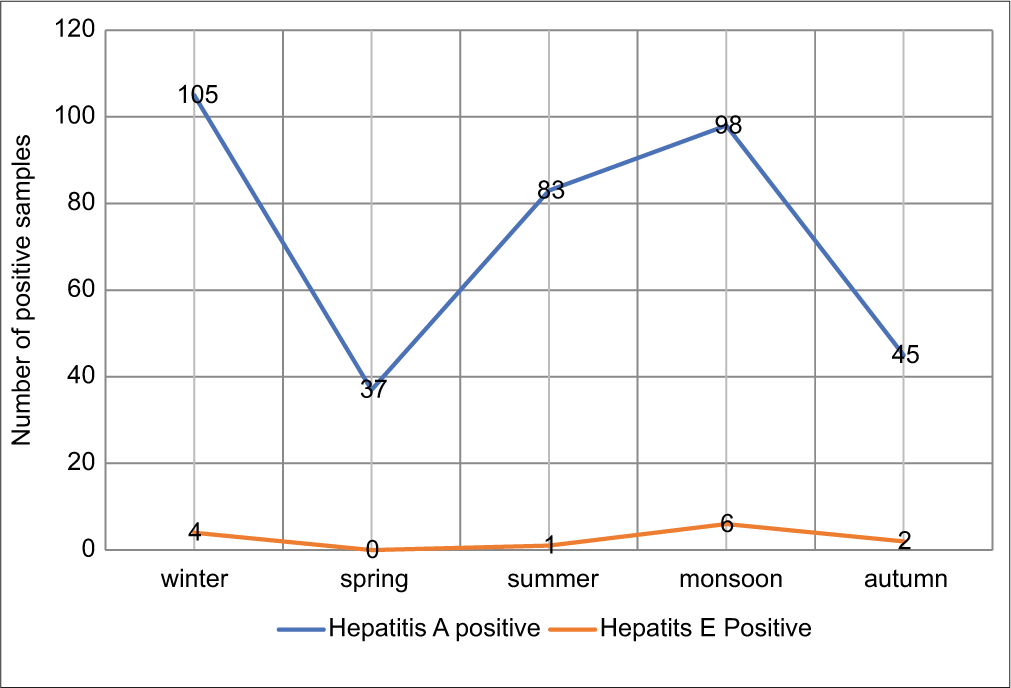
- Seasonal prevalence of hepatitis A virus and hepatitis E virus throughout the year.
Age and Gender Analysis
Among the samples that tested positive for HAV serology, 55.1% (n = 378) were from male patients, whereas 52.4% (n = 11) of HEV-positive samples were from female patients. None of the female patients who tested positive for either HAV or HEV were pregnant. Among HAV-positive cases, 42.4% (n = 291) were in the pediatric age group (<10 years), followed by 30% (n = 206) in the 11–20-year age group. Conversely, HEV positivity was predominantly observed in adults, with only one positive sample in the pediatric group (<10 years), while a clear majority of 47.6% (n = 10) were in the 21–30-year age group.
Coinfection Rate and Clinical Presentation
Over the course of the study, a co-infection rate of 0.17% for HAV and HEV was identified, with all co-infected cases found in males aged 21–30 years. The most common clinical symptoms among patients included jaundice, fever, pruritus, fatigue, abdominal pain, and nausea/vomiting.
DISCUSSION
The global health burden posed by enterically transmitted viral hepatitis, particularly HAV and HEV, remains substantial. Between 1990 and 2019, the incidence of hepatitis A cases globally rose by 13.9%, increasing from 139.54 million to 158.94 million cases.[9] Prevalence rates in the literature vary widely, with documented HEV prevalence ranging from 12.6% to 78.6% and HAV prevalence from 1.7% to 67%.[7,10-14] In our study, seroprevalence rates were observed at 20.3% for HAV and 0.6% for HEV, with a co-infection rate of 0.17%. These findings indicate that HAV infections were notably more prevalent, which can be attributed to certain outbreaks of hepatitis A in this region of India during the study period. This prevalence rate aligns closely with a study conducted in Himachal Pradesh by Sharma et al., which reported a similar seroprevalence of 11.2% for HAV, a low 1.8% for HEV, and a co-infection rate of 0.5%.[10] In contrast, Kalita et al. in Uttarakhand reported an inverse trend, noting a higher HEV seroprevalence of 28% compared to 14.7% for HAV, with a co-infection rate of 5.2%.[15] Data from the Viral Research and Diagnostic Laboratory network in India suggest regional prevalence variations, with HAV more common in the northern areas, while HEV dominates in the western, central, and eastern regions.[16]
Overall, the most prevalent way of acquiring both HAV and HEV simultaneously is through fecal-oral transmission or waterborne infection. Kumar et al. (2006) reported a high co-infection rate of 24.4%, Agrawal et al. (2016) observed a lower rate of 5.2%, with even further reduced rates of 2.2% and 0.5% documented by Sarangi et al. (2019) and Sharma et al. (2024), respectively.[3,10,17,18] Our study reports an even lower co-infection rate of 0.17%, which may reflect increased antibody prevalence, heightened awareness and vaccination, and improved socioeconomic conditions. All co-infected cases in our study were observed among males aged 21–30 years. Although HAV and HEV are typically self-limiting infections, co-infection can lead to significantly worse clinical outcomes, especially in vulnerable populations. HAV-HEV co-infection has been associated with an increased risk of ALF, prolonged hospital stays, and higher mortality, particularly among pregnant women, immunocompromised individuals, and patients with underlying liver conditions. The immune response to simultaneous infections can intensify hepatic inflammation, potentially leading to severe hepatic injury. The synergistic hepatotoxic effects may compromise liver function more rapidly than single infections. While our study found a very low co-infection rate (0.17%), all co-infected cases occurred in young adult males, aligning with other regional studies that show similar patterns.
HAV infections are often associated with younger age groups. Consistent with this, 42.4% of HAV-positive cases in our study were under 10 years of age, whereas 47.6% of HEV-positive cases were in the 21–30-year age group. Similar age-related findings were noted by Rawat et al.[19] HAV is more prevalent in children because they are often exposed early in life, especially in areas with poor sanitation and hygiene. The virus spreads through the fecal-oral route, and children frequently contract it through contaminated food, water, or close contact. In most cases, these infections are mild or asymptomatic, allowing them to develop immunity without noticeable illness. On the other hand, HEV is more common in adults because exposure tends to occur later in life, often during waterborne outbreaks or through consumption of undercooked meat in the case of zoonotic strains. It is typically more severe in adults and can be particularly dangerous for pregnant women. Unlike HAV, there is no widely used vaccine for HEV, leaving many adults vulnerable to infection. Our study also revealed a gender-based distinction, with most HAV cases seen in males and HEV cases more prevalent among females. This contrasts with the findings of Al Naimi, Kamal, and Joon, who reported higher seroprevalence of both HAV and HEV in males.[20-22]
Throughout the study period, both HAV and HEV showed consistent positivity, with distinct surges in hepatitis A during the winter and monsoon seasons. Heavy seasonal runoff during the rainy season often contaminates water sources, leading to an uptick in HAV and HEV infections. Similar seasonal outbreaks have been reported in other studies. The winter outbreaks may be attributed to fecal contamination of water pipelines, which can compromise drinking water quality.[19,23-25] In a 3-year study conducted by Kadri et al. (2018) spanning from 2015 to 2017, a total of 23 outbreaks were reported, resulting in 393 cases of hepatitis in various regions of Kashmir.[11] Of these outbreaks, 12 were attributed to hepatitis A and 10 to hepatitis E. Notably, three out of the 23 outbreaks occurred during the monsoon season (June to October), highlighting the significant role that hygiene, sanitation, and socioeconomic conditions play in the transmission of HAV and HEV.
Strategies to Enhance Vaccination and Sanitation Efforts in Communities
To address the prevalence of HAV and HEV, a multifaceted strategy emphasizing vaccination and improved sanitation is essential. Public education and regular immunization, especially for vulnerable groups such as pregnant women and chronically ill individuals, should be prioritized. Community outreach through healthcare workers, integration into primary care, and targeted hygiene awareness can broaden the impact. Infrastructure upgrades, access to clean water, and effective waste management are vital. Emphasis should be placed on underserved areas. Active surveillance, crisis preparedness, and collaboration with international bodies will support the long-term control and prevention of the disease.
Strengths and Limitations of the study
This study is the first of its kind from Kashmir, India, adding to the literature about the seroprevalence of hepatitis A and hepatitis E in this part of the world. The number of cases and locations studied may be more significant in relation to the population. More data from different regions is recommended. Only symptomatic patients presenting to or admitted to the hospital were included in this study, thus excluding asymptomatic individuals who were unaware of their infection. Excluding asymptomatic individuals, who may still carry antibodies or active infection, can result in a biased picture of the actual disease burden, warranting further studies. These individuals often go undetected in hospital-based studies but may form a substantial portion of the infected population, especially in the case of HAV and HEV, which frequently cause mild or subclinical infections, particularly among children and young adults. Financial constraints restricted the ability to perform genotyping on the positive samples.
CONCLUSION AND IMPLICATIONS FOR TRANSLATION
The clinical diagnosis of AVH requires serological validation to accurately identify the various causative viral agents. This investigation reveals a heightened seroprevalence of hepatitis A in Northern India and a seasonal surge in cases of both hepatitis A and E during the monsoon and winter months. We found a lower incidence of coinfections with HAV and HEV; however, the ramifications of this dual infection remain ambiguous, warranting further scholarly inquiry to evaluate its impact. From a broader public health perspective, these findings highlight the need for integrated prevention strategies that address both immediate and structural risk factors. Ensuring universal access to safe drinking water and implementing robust sewage and waste management systems are critical in interrupting fecal-oral transmission pathways. In addition, expanding community education campaigns on hygiene, enhancing routine immunization coverage for HAV, and establishing rapid outbreak detection and response frameworks can collectively reduce morbidity, prevent future epidemics, and alleviate the healthcare burden. These interventions are especially vital in high-risk and underserved areas, where the consequences of enterically transmitted hepatitis can be most severe and far-reaching.
Key Messages
1) Higher seroprevalence of hepatitis A warrants the critical importance of hepatitis A vaccination, particularly within the pediatric population. 2) Improving sanitation practices can significantly reduce the disease burden, offering greater protection to individuals across the Indian subcontinent.
Acknowledgments:
The authors acknowledge the Virus Research and Diagnostic Laboratory (VRDL) at Sher-i-Kashmir Institute of Medical Sciences, under the Department of Health Research, Ministry of Health and Family Welfare, Government of India, for their support in providing diagnostic infrastructure, reagents, and technical expertise during the conduct of this study.
COMPLIANCE WITH ETHICAL STANDARDS
Conflicts of Interest: The authors declare no competing interests. Financial Disclosure: Nothing to declare. Funding/Support: There was no funding for this study. Ethics Approval: The research/study was approved by the Institutional Review Board at Sher-i-Kashmir Institute of Medical Sciences, number 147/2024, dated 21 August 2024. Declaration of Patient Consent: Patient’s consent is not required, as there are no patients in this study. Use of Artificial Intelligence (AI)-Assisted Technology for Manuscript Preparation: The authors confirm that there was no use of artificial intelligence (AI)-assisted technology for assisting in the writing or editing of the manuscript, and no images were manipulated using AI. Disclaimer: None.
References
- Global Viral Hepatitis. 2024. (cited 2024 Nov 14). Available from: https://www.cdc.gov/hepatitis/global/index.html
- [Google Scholar]
- Hepatotropic viruses as etiological agents of acute liver failure and related-outcomes among children in India: A retrospective hospital-based study. BMC Res Notes. 2015;8:381.
- [CrossRef] [PubMed] [Google Scholar]
- A study of seroprevalence and co-infection of hepatitis A and hepatitis E viruses in sporadic cases in an endemic area. J Med Sci Health. 2016;2(3):1-5.
- [CrossRef] [Google Scholar]
- Seroprevalence of hepatitis A and hepatitis E in patients at a teaching hospital of northern India over a period of 8 years. J Family Med Prim Care. 2022;11(2):567-72.
- [CrossRef] [PubMed] [Google Scholar]
- Co-Infection of hepatitis A and hepatitis E viruses among the acute viral hepatitis cases in tertiary care hospital-a four years retrospective study. J Pure Appl Microbiol. 2020;14(3):2047-51.
- [CrossRef] [Google Scholar]
- Trends in Seroprevalence of Enteric Transmitted Hepatitis Virus Infections at a Tertiary Care Hospital in Delhi: A 4-year review. Int J Community Med Public Health. 2023;10(11):4280-3.
- [CrossRef] [Google Scholar]
- Prevalence of Hepatitis A Virus (HAV) and Hepatitis E Virus (HEV) in patients presenting with acute viral hepatitis: A 3-year retrospective study at a tertiary care hospital in western India. J Family Med Prim Care. 2022;11(6):2437-41.
- [CrossRef] [PubMed] [Google Scholar]
- The strengthening of the reporting of observational studies in epidemiology (STROBE) statement: Guidelines for reporting observational studies. J Clin Epidemiol. 2008;61(4):344-9.
- [CrossRef] [PubMed] [Google Scholar]
- The global trends and regional differences in incidence and mortality of hepatitis A from 1900 to 2019 and implications for its prevention. Hepatol Int. 2021;15:1068-82.
- [CrossRef] [PubMed] [Google Scholar]
- Seroprevalence of hepatitis A virus and hepatitis E virus in patients presenting with acute viral hepatitis: A retrospective study of 2 years at a tertiary care hospital, Himachal Pradesh in northern India. Indian J Microbiol Res. 2024;11(1):38-41.
- [CrossRef] [Google Scholar]
- Hepatitis A and E outbreak surveillance during 2015-2017 in Kashmir, India: Is the water to blame? J Epidemiol Glob Health. 2018;8(3-4):203-7.
- [CrossRef] [PubMed] [Google Scholar]
- Hepatitis A and E seroprevalence and associated risk factors: A community-based cross-sectional survey in rural Amazonia. BMC Infect Dis. 2014;14:458.
- [CrossRef] [PubMed] [Google Scholar]
- Prevalence of hepatitis A virus and hepatitis E virus in the patients presenting with acute viral hepatitis at a tertiary care hospital, Jaipur Rajasthan. N Niger J Clin Res. 2016;5:47-50.
- [CrossRef] [Google Scholar]
- Infectious Hepatitis: A 3-year retrospective study at a Tertiary care Hospital in India. Indian J Med Microbiol. 2019;37:230-4.
- [CrossRef] [PubMed] [Google Scholar]
- Simultaneous infection of hepatitis a and hepatitis e viruses amongst acute viral hepatitis patients: A hospital-based study from uttarakhand. J Family Med Prim Care. 2020;9(12):6130-4.
- [CrossRef] [PubMed] [Google Scholar]
- Epidemiology of hepatitis A and hepatitis E based on laboratory surveillance data-India. Am J Trop Med Hyg. 2017;99(4):1058-61.
- [CrossRef] [PubMed] [Google Scholar]
- Does co-infection with multiple viruses adversely influence the course and outcome of sporadic acute viral hepatitis in children? J Gastroenterol Hepatol. 2006;21(10):1533-7.
- [CrossRef] [PubMed] [Google Scholar]
- Faecal-Oral-transmitted hepatitis A and E Prevalence in Eastern India: A 3-year retrospective study. J Med Soc. 2019;33:86-90.
- [CrossRef] [Google Scholar]
- Prevalence of hepatitis A virus and hepatitis E virus in patients presenting with acute viral hepatitis in Rohtak, Haryana, India. Int J Res Med Sci. 2019;7(5):1792-5.
- [CrossRef] [Google Scholar]
- Predicting acute viral hepatitis serum markers (A and E) in patients with suspected acute viral hepatitis attending primary health care centers in Baghdad: A one-year cross-sectional study. Glob J Health Sci. 2012;4:172-83.
- [CrossRef] [PubMed] [Google Scholar]
- Viral Hepatitis A to E in South Mediterranean Countries. Mediterr J Hematol Infect Dis. 2010;2:e2010001.
- [CrossRef] [PubMed] [Google Scholar]
- Prevalence of hepatitis A virus (HAV) and hepatitis E virus (HEV) in the patients presenting with acute viral hepatitis. Indian J Med Microbiol. 2015;33:102-5.
- [CrossRef] [PubMed] [Google Scholar]
- Seroprevalence of hepatitis A virus (HAV) and hepatitis E virus (HEV) co-infection in patients presenting with acute viral hepatitis attending a tertiary care hospital in north India. J Commun Dis. 2017;49(3):57-60.
- [CrossRef] [Google Scholar]
- Study of an epidemic of non-A, non-B hepatitis. Possibility of another human hepatitis virus distinct from post-transfusion non-A, non-B Type. Am J Med. 1980;68:818-24.
- [CrossRef] [PubMed] [Google Scholar]
- Hepatitis E virus: A leading cause of waterborne viral hepatitis in the northwest districts of Punjab, India. J Lab Physicians. 2017;9(2):121-4.
- [CrossRef] [PubMed] [Google Scholar]