Strengthening Rural Food Systems through the UN World Food Program’s Fresh Food Voucher in Ethiopia’s Somali Region: An Evaluation of Nutritional and Market Impacts

*Corresponding author: Fazal Dad, WFP Ethiopia CO, Regional Bureau Nairobi, Addis Ababa, Ethiopia fazal.dad@wfp.org, fazaldadnutritionist@gmail.com
-
Received: ,
Accepted: ,
ABSTRACT
Background and Objective
Malnutrition remains a major global health issue. Ethiopia experiences high rates of child undernutrition, with 39% stunting, 11% wasting, and 22% underweight, contributing to a significant economic burden that costs 16.5% of gross domestic product (GDP) annually. Nearly half (47%) of Ethiopian children face severe food poverty, consuming two or fewer food groups daily. The study aimed to assess the impact of the community-supported Fresh Food Voucher (FFV) project on the nutritional status of children under five and women, evaluate the effectiveness of Social Behavior Change Communication (SBCC) in improving mothers’ nutritional knowledge, and examine the project’s role in strengthening local markets.
Methods
We used a quasi-experimental design and targeted 6200 households with children under 5 years and pregnant and lactating women. Statistical analyses were conducted using MS Excel, Emergency Nutrition Assessment (ENA) for Standardized Monitoring and Assessment of Relief and Transitions (SMART), and Statistical Package for the Social Sciences (SPSS). Descriptive statistics were used to examine variations in mean values at a 5% level of significance (α = 0.05).
Results
The results demonstrated significant reductions in both moderate and severe wasting. Weight-for-height z-scores showed an overall decline in wasting from 25.5% to 20.8% (p < 0.05), while Mid Upper Arm Circumference (MUAC)-based wasting dropped from 18.6% to 10.6% (p < 0.05). Dietary improvements among children aged 6–23 months were also observed, with the proportion meeting Minimum Dietary Diversity (MDD) rising from 9.5% to 20.9% (p = 0.04) and Minimum Acceptable Diet (MAD) from 5.6% to 8.9%. Food Consumption Scores (FCS) improved significantly, with households in the acceptable range increasing from 10.4% to 43.0%, and those in the poor category decreasing from 68.6% to 9.8% (p < 0.05). Household Dietary Diversity Scores (HDDS) improved significantly, with high diversity increasing from 6.3% to 91.2%. Significant improvements were also observed in maternal knowledge and practices related to infant and young child feeding (IYCF), maternal nutrition, and hygiene.
Conclusions and Implications for Translation
The community-supported FFV programs can reduce child wasting, improve dietary diversity, and enhance maternal nutrition knowledge. The findings show strong potential for scaling in resource-limited settings to boost nutrition and strengthen the local food systems. By stimulating poultry production and empowering women economically, the FFV program builds nutritional and economic resilience, though addressing food quality and supply chain challenges remains essential for sustainability.
Keywords
Fresh Food Voucher
Rural Food Systems
Social Behavior Change Communication
Ethiopia
INTRODUCTION
Malnutrition continues to pose a major challenge to human well-being worldwide. An estimated 144 million children under five suffer from stunting, 47 million children under five are wasted, and 340 million suffer from micronutrient deficiencies.[1] The average prevalence of stunting in developing countries is 25%. Additionally, only 8% of children aged 6–23 months consumed the minimum recommended food groups.[2] Ethiopia is amongst the countries with the highest number of stunted children under five.[2,3] Undernutrition remains a major challenge with significant consequences for individuals, the economy, and health systems, costing the country 16.5% of gross domestic product (GDP) annually.[4,5] More than half of children under 5 years of age are affected by any form of malnutrition. Around 39% of children under five are stunted, 11% are wasted, and 22% are underweight; these figures differ across the regions. Overall, 47% of children are in severe food poverty, meaning they consume 2 or fewer food groups a day, contributing to a high rate of acute malnutrition.[6] Around 39% of Ethiopian children <5 years have signs of stunting, with a similar trend of 38% stunting in the Somali region, and the minimum dietary diversity (MDD) practices in children are as low as 2%, while 75% cannot afford a nutritious diet.[6] Evidence from the Fill the Nutrient Gap Analysis of Ethiopia shows that dietary diversity and meal frequency are particularly low among children under 2 years of age, and only one out of four households can afford a nutritious, diversified diet.[7] The Somali region faces various risks, including natural disasters, conflicts, epidemics, and widespread displacement driven by climate change. The region is also plagued by significant food insecurity, particularly among women and children, which leads to malnutrition. Limited knowledge of appropriate maternal, infant, and young child nutritional (MIYCN) practices is also a major driver of malnutrition in rural areas. The government of Ethiopia and its partners provide nutrition support to the affected population to rehabilitate wasting in children under 5 years and mothers through specialized nutritious foods[8] such as super cereal plus, ready-to-use supplementary food (RUSF), and ready-to-use therapeutic food (RUTF). However, given the underlying level of food security, the other household members share the same commodities, undermining the value-for-money and cost-effectiveness of these specialized foods while hampering the nutrition rehabilitation of wasted mothers and children.The Productive Safety Net Program (PSNP) of the Government of Ethiopia provides food baskets to vulnerable households, which partially cover households’ nutritional needs.
Objectives of the Study
The core objectives of the study were to:
- Assess the impact of innovative community-supported FFV projects in improving the nutritional status of children under five and women.
- Evaluate the effectiveness of Social Behavior Change Communication (SBCC) in improving the nutritional knowledge of mothers participating in the FFV project.
- Examine the role of the FFV project in strengthening the local markets in the Somali region.
METHODS
Study Location and Design
A quasi-experimental design was used to conduct the study from April to October 2023 in three rural woredas (districts) (Degahabor, Gode, and Kebridehar) of the Somali region in Ethiopia. The study aimed to examine the pre- and post-intervention impact of electronic fresh food vouchers (FFVs) on preventing wasting in children under five and pregnant and lactating women, improving their nutritional knowledge, and strengthening local market functionality.
Eligibility Criteria
Households enrolled in General Food Distribution (GFD) assistance with children under 5 years and pregnant and lactating women (PLW) were considered eligible for the study.
Target and Source of Population
Following the GFD-registered households, a total of 6200 households were enrolled for the FFV interventions based on the criteria mentioned above, across three targeted woredas (districts) as shown in Table 1; the sample size for the proposed study was calculated from the list of registered households accordingly.
| Region | Zone | Woreda (district) | # of kebeles (villages) | # of FFV HHs |
|---|---|---|---|---|
| Somali | Jarar | Degahabor | 12 | 1790 |
| Shabelle | Gode | 29 | 3210 | |
| Korahey | Kebridehar | 10 | 1200 | |
| Total | 51 | 6200 | ||
Intervention
In the Somali region, the World Food Program (WFP) FFV program “topped up” the food basket of 6200 vulnerable households hosting pregnant, breastfeeding, and children aged 6–59 months to reduce wasting and promote growth by supplementing and improving the diet quality of these individuals. In the FFV program, a digital voucher is sent monthly via Short Message Service (SMS) to the beneficiary household’s mobile phone. The SMS message includes a code used to purchase fruits, vegetables, and eggs from small retailers in rural markets. Both the beneficiary and the retailer are enrolled in the program and need a simple analogue mobile phone. The beneficiary’s household sends the SMS-based code to the retailer’s mobile phone to process payment for the commercial transaction. No internet connection is needed for the transfer.
General Food Distributions (GFD)
GFD is an effective food-for-work (FFW) activity used to cover food requirements for 3–9 months per year in communities suffering from unexpected shocks resulting in unanticipated food shortages. Free general rations are permitted for those who are physically unable to work or unable to rely upon family or community assistance, or where capacity to organize FFW does not exist.
WFP Fresh Food Voucher (FFV) Top Up
The FFV households were registered from GFD households based on the eligibility criteria mentioned above. Restricted cash-based transfers (CBTs) are granted to redeem FFVs from retailers in local markets. The food voucher included locally available and locally produced foods, considering the nutritional requirements of PLW and children aged 6–59 months. The voucher provides a fixed cash amount that recipients can use to purchase food items from a specified list: cabbage, green pepper, onion, tomato, egg, potato, carrot, mango, orange, and banana, etc. The beneficiaries received SBCC messages about MIYNC, antenatal and postnatal care, and dietary diversity.
Sample Size Calculation
The sample size was calculated using the wasting prevalence from the recent national demographic survey,[9] which reported 21% wasting in children under 5 years. We determined the sample size using OpenEpi,[10] based on the parameters below. We adopted a 7% change in nutrition outcomes as the intervention effect size from the Research on Food Assistance for Nutritional Impact (REFANI) project,[11] which examined the impact of food assistance (including cash, vouchers, and direct food transfers) on nutrition outcomes in crisis-affected contexts in Niger, Pakistan, and Somalia.
The sample size was calculated to detect a 7% effect size with 80% statistical power at a 5% level of significance (α = 0.05), assuming an exposed-to-unexposed ratio of 1:1. To account for potential non-response or loss to follow-up, a 10% adjustment was applied. Based on these assumptions, we determined a total sample size of 717 participants and allocated it across three woredas [Table 2].
| Woreda/district | Calculated sample size | 10% non-response rate/dropout | Total sample size |
|---|---|---|---|
| Degahabor | 186 | 21 | 207 |
| Gode | 334 | 37 | 371 |
| Kebridehar | 125 | 14 | 139 |
| Total | 645 | 72 | 717 |
Sampling Procedure
The sample was drawn from the FFV-registered households. The households were sampled at the kebele (village) level, meaning the number of samples was weighted by the proportion of beneficiaries in each kebele using the probability proportional to size (PPS) approach, and households were then randomly selected from the sampled kebele using systematic random sampling. The researchers interviewed beneficiaries from the randomly selected households.
Sampling Flow
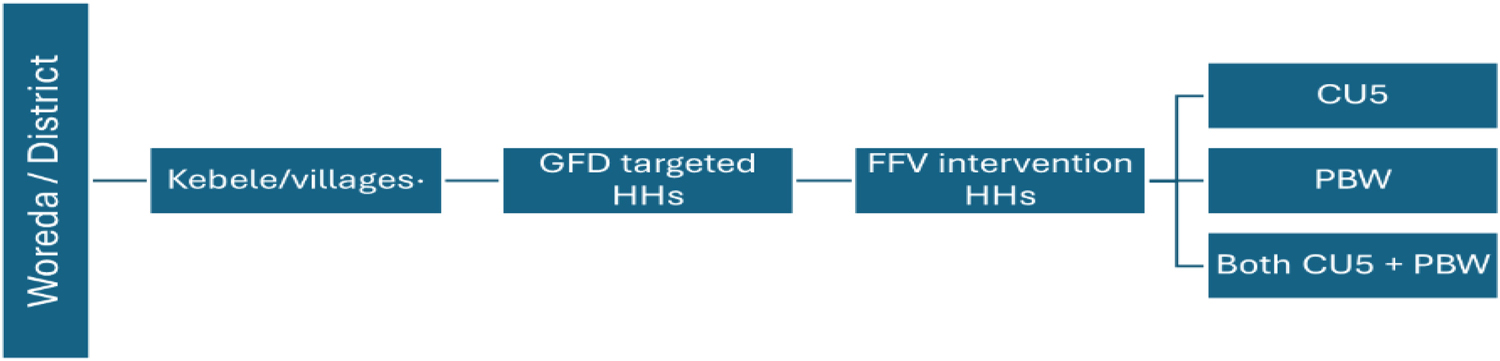
The selected woredas/districts constituted the primary geographical sampling units, from which eligible kebeles/villages were identified. Within the selected kebeles/villages, households targeted for General Food Distribution (GFD) were identified as the sampling frame. Among these households, those targeted for the Fresh Food Voucher (FFV) intervention were included in the study. FFV-targeted households were subsequently classified into three mutually defined beneficiary categories based on household composition i.e., households with children under five years of age (CU5), households with pregnant and breastfeeding women (PBW) and households with both CU5 and PBW.
Data Collection Procedures
Structured household questionnaires were programmed into the WFP’s corporate data collection platform, Mobile Data Acquisition (MODA), using the Open Data Kit (ODK) interface.
Household Interview
Structured questionnaires programmed in MODA were used. Enumerators and local guides explained the objective of the study to the head of the selected household. They requested oral consent to conduct interviews and anthropometric measurements (Mid-Upper Arm Circumference (MUAC), edema, weight, and height/length).
In each household, we targeted children under 5 years and their mothers/caregivers for anthropometric measurements. Interviews were conducted only with the household head and spouse. If the household head and/or spouse were not available during the visit, an appointment was made for when they would be available to conduct the interviews.
Anthropometry
All anthropometric measurements followed the WHO-UNICEF 2016 guidelines.[11] MUAC (cm) for both mother and child, as well as weight (kg) and height/length (cm) and nutritional bilateral edema for children, were measured to calculate nutritional indices. Measurements followed WHO/UNICEF and national guidelines.[8]
Infield Data Quality
The anthropometric data were collected through ODK and hosted on MODA servers; the WHO-approved Z-score validation media files ensure anthropometric data quality at the enumerator/household level. Z-score validation prevents enumerators from continuing with incorrect measurements and prompts repeat measurements, improving data quality assurance and reducing data flags; it also supports anthropometric data and plausibility checks in Emergency Nutrition Assessment (ENA)/SMART[12] software.
Data Quality Management
Data collectors checked for any inconsistencies and incomplete responses before leaving the household. In addition, supervisors followed up with data collectors to check data quality. The completeness, consistency, and appropriateness of the data were also checked as soon as it was uploaded to the central database of the online data collection system. Outliers were excluded if they could not be edited during analysis. Plausibility checks were conducted for anthropometric data using ENA for SMART software.[13] Moreover, pre-tests and feedback sessions during training and data collection minimized potential errors.
Sensitization
Kebele (village) and woreda (district) government officials in the project areas were sensitized on the data collection process and protocols. Furthermore, the selected respondents were also briefed on the purpose of data collection and the confidentiality of the information they provided. Respondent-level sensitization was led by the enumerators as it was related to data collection.
Data Analysis
Statistical analyses were conducted using MS Excel, ENA for SMART, and SPSS. Household demographic data were analyzed in MS Excel, anthropometric data in ENA for SMART, and nutrition and food security indicators in SPSS. Descriptive statistics were used to summarize the data and examine variations in mean values, with statistical significance assessed at the 5% level (α = 0.05).
Ethical Clearance and Consent
The study was conducted as part of the program implementation. Therefore, no ethical clearance was required. However, study respondents were briefed on the purpose of the study and confidentiality of information. Interviews were conducted only with respondents’ consent after obtaining electronic consent.
RESULTS
Households’ Demography
The physiological status of women in the study population shifted over the study period. From baseline to endline, the proportion of pregnant women decreased from 27% to 22%, and the proportion of lactating women decreased from 48% to 35%. Conversely, the proportion of women who were neither pregnant nor lactating increased from 25% to 43%, indicating a natural progression through the reproductive cycle within the study population [Table 3]. The distribution of pregnant women across trimesters showed variation from baseline to endline. The proportion in the first and second trimesters declined from 21.8% to 17.1% and from 50.0% to 44.5%, respectively, while those in the third trimester increased from 28.2% to 38.4%. Additionally, the percentage of primigravida women significantly decreased from 8.0% at baseline to 3.1% at endline. The proportion of women breastfeeding during pregnancy declined from 5.0% at baseline to 1.7% at endline, suggesting improved child spacing practices or increased awareness and adoption of maternal and child health recommendations that discourage concurrent breastfeeding and pregnancy. The proportion of women breastfeeding during pregnancy declined from 5.0% at baseline to 1.7% at endline, indicating increased adherence to maternal and child health recommendations.
| Baseline | Endline | |
|---|---|---|
| Physiological status of mothers/respondents | ||
| Pregnant | 27% | 22% |
| Lactating | 48% | 35% |
| Neither pregnant nor lactating | 25% | 43% |
| Pregnancy status of the women | ||
| Women in the 1st trimester | 21.8% | 17.1% |
| Women in the 2nd trimester | 50.0% | 44.5% |
| Women in the 3rd trimester | 28.2% | 38.4% |
| Women with primigravida | 8.0% | 3.1% |
| Women breastfeeding during pregnancy | 1.7% | 5.0% |
| Households with vulnerable groups | ||
| Children aged 6–23 months | 23.8% | 33.5% |
| Children aged 24–59 months | 37.6% | 57.1% |
| Women aged 15–49 months (average) | 1.2% | 1.1% |
CHILDREN’S NUTRITIONAL STATUS
Table 4 revealed a comparative analysis of undernutrition among children under 5 years of age (CU5) between baseline and endline assessments, using standard anthropometric measurements. The nutritional status of CU5 improved significantly, particularly in reducing acute malnutrition. Based on weight-for-height z-scores, moderate wasting declined from 19.0% to 16.3%, while severe wasting decreased from 6.5% to 4.4%, resulting in an overall reduction from 25.5% to 20.8% (p < 0.05). Similar patterns were observed by MUAC, with moderate wasting declining from 16.0% to 9.2% and severe wasting from 2.5% to 1.3%, contributing to a significant overall decline from 18.6% to 10.6% (p < 0.05). The reduction in wasting rate is attributed to the FFV intervention, which increased household access to nutrient-dense foods, including fruits, vegetables, and eggs, which are often inaccessible due to cost in food-insecure households.[14,15]
| Level wasting | Baseline | Endline | p value |
|---|---|---|---|
| Wasting based on weight-for-height z-scores | |||
| Moderate | 19.0% 95% Cl: (16.1%–21.9%) | 16.3% 95% Cl: (13.6%–19.0%) | 0.04 |
| Severe | 6.5% 95% Cl: (4.7%–8.3%) | 4.4% 95% Cl: (2.9%–5.9%) | |
| Overall | 25.5% 95% Cl: (22.3%–28.7%) | 20.8% 95% Cl: (17.8%–23.8%) | |
| Wasting based on MUAC cutoffs | |||
| Severe | 2.5% 95% Cl: (1.4%–3.6%) | 1.3% 95% Cl: (0.4%–2.2%) | 0.02 |
| Moderate | 16.0% 95% Cl: (13.3%–18.7%) | 9.2% 95% Cl: (7.1%–11.3%) | |
| Overall | 18.6% 95% Cl: (15.8%–21.4%) | 10.6% 95% Cl: (8.4%–12.8%) | |
COMPLEMENTARY FEEDING PRACTICES
The study observed significant improvements in the dietary intake of children aged 6–23 months over the course of the intervention (p = 0.04). The proportion of children meeting the MDD increased significantly from 9.5% at baseline to 20.9% at endline, indicating improved consumption of foods from at least five different food groups within 24 hours [Figure 1]. The improvement reflects the effectiveness of behavior change communication interventions implemented through community platforms and health services, which aimed to promote dietary diversity and appropriate complementary feeding.[16,17]
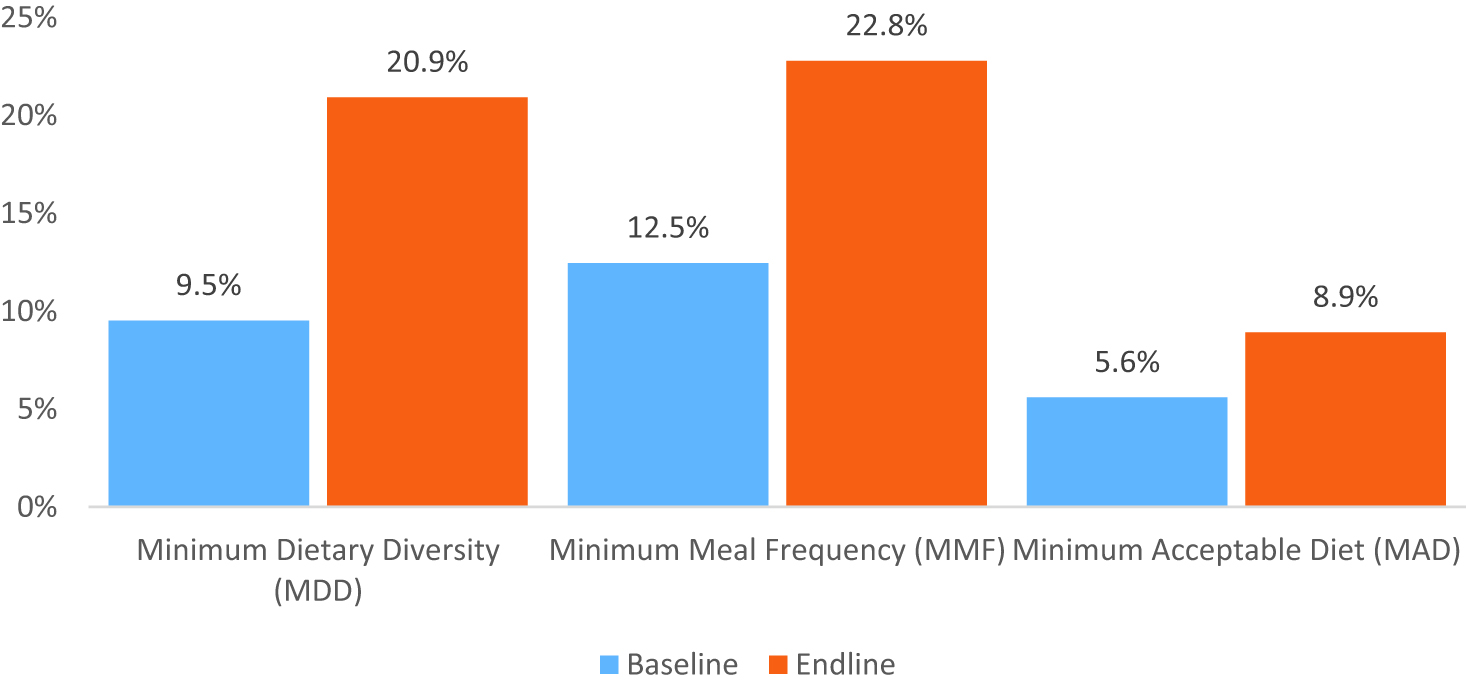
- Proportion of children 6–23 months who receive a Minimum Acceptable Diet.
The proportion of children 6–23 months achieving Minimum Meal Frequency (MMF) increased from 12.5% to 22.8%, indicating progress in age-appropriate feeding occasions, potentially influenced by cooking demonstrations and caregiver group sessions. Improved health worker counseling and engagement may have also contributed.[18,19] Similarly, the proportion of children 6–23 months receiving Minimum Acceptable Diet (MAD) improved from 5.6% to 8.9%. Despite these improvements, the low overall levels of MAD underscore the multifaceted barriers to optimal feeding practices, including food insecurity, gender roles in caregiving, limited maternal autonomy, and persistent misconceptions about young child feeding.[20,21]
HOUSEHOLD FOOD CONSUMPTION
The proportion of households with an acceptable food consumption score (FCS) increased significantly from 10.4% at baseline to 43.0% at endline (p < 0.05), indicating improved access to and consumption of nutritionally adequate diets [Figure 2]. Concurrently, the proportion of households in the poor FCS category declined dramatically from 68.6% to 9.8%, reflecting a significant reduction in the most food-insecure households. The proportion of households in the borderline category increased modestly from 21.0% to 27.1%, suggesting that some households moved from poor to borderline, though still not achieving full dietary adequacy.
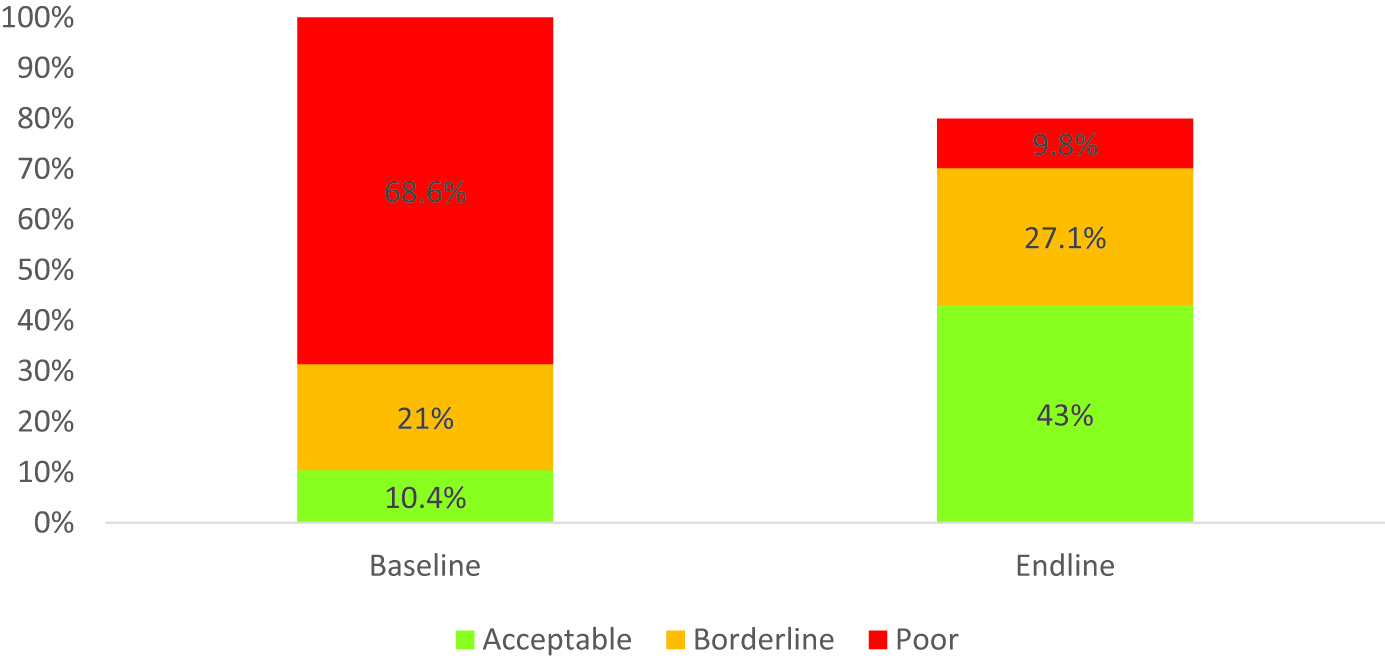
- Households’ food consumption score (FCS).
The findings indicated the effectiveness of the intervention, which has improved household purchasing power and access to diverse and nutrient-dense foods, which is especially effective in fragile or food-insecure contexts, where market-based solutions can enhance both food access and local economies.[22,23]
HOUSEHOLD DIETARY DIVERSITY
The Household Dietary Diversity Score (HDDS) showed a significant difference from low to high dietary diversity between baseline and endline. At baseline, most households (55.6%) reported low dietary diversity (fewer than 3 food groups), while only 6.3% reported high dietary diversity (more than 5 food groups). At endline, there were no households remaining in the low dietary diversity category, and the proportion with high dietary diversity increased to 91.2% (p < 0.05). Meanwhile, the proportion in the medium category (4–5 food groups) decreased from 38.1% to 8.8%, reflecting a broad shift into the higher tier of dietary quality [Figure 3].

- Households’ dietary diversity score (HDDS).
The findings indicate that the FFV intervention strongly improved household access to a wider variety of diversified food groups. The intervention likely enhanced not only the quantity but also the nutritional quality of household diets, a key factor in addressing both macro- and micronutrient deficiencies.[24,25] Improved dietary diversity is associated with better nutritional outcomes, particularly for women and children, and is a recognized indicator of improved food security and economic resilience.[26,27]
MATERNAL KNOWLEDGE, ATTITUDE AND PRACTICES
Nutrition and Infant Feeding
The study found a significant (p = 0.001) improvement in maternal awareness of key infant and young child feeding (IYCF) practices and maternal nutrition, reflecting enhanced reach and effectiveness of social behavior change interventions [Table 5].
| Baseline | Endline | p value | |
|---|---|---|---|
| Proportion of mothers aware of the recommended breastfeeding duration (24 months and above) | 28% | 44% | 0.001 |
| Proportion of mothers aware of the recommended time for feeding liquids other than breast milk (at 6 months) | 34% | 36% | |
| Proportion of mothers aware of the appropriate age for the child to start animal-source foods (at 6 months) | 10% | 21% | |
| Proportion of mothers aware of the appropriate age for the child to start fruits (at 6 months) | 1% | 16% | |
| Proportion of mothers aware of the appropriate age for starting vegetables (at 6 months) | 1% | 17% | |
| Proportion of mothers aware of the appropriate age for the child to start family food | 29% | 38% | |
| Proportion of mothers aware of appropriate eating during pregnancy (more frequently) | 37% | 51% | |
| Proportion of mothers aware of appropriate eating during lactation (more frequently) | 59% | 74% | |
| Proportion of mothers who are aware of more frequent feeding during child illness | 34% | 42% | |
| Proportion of mothers who received any nutrition message in the last month | 28% | 65% | |
| Source of message | |||
| Home visit | 40% | 54% | |
| Health post | 49% | 75% | |
| Type of messages received in the past month | |||
| Giving colostrum to baby | 57% | 65% | 0.006 |
| BF initiation within 1 hour | 35% | 64% | |
| Only BF till 6 months | 49% | 64% | |
| Complementary feeding at the age of 6 months | 36% | 36% | |
| Enriching porridge with oil, meat, egg, lentils | 18% | 20% | |
| Feeding animal food to child | 9% | 20% | |
| Feeding diversified food | 7% | 20% | |
| Eating fruits, vegetables and animal foods | 10% | 15% | |
| Feed a sick child | 7% | 27% | |
| Water and sanitation | 10% | 52% | |
Awareness of the recommended duration for breastfeeding (24 months and above) increased significantly from 28% at baseline to 44% at endline. This improvement is critical, as sustained breastfeeding is linked to lower risks of infection, improved cognitive outcomes, and better nutritional status in early childhood.[28] Knowledge gains were also observed in complementary feeding practices, though improvements varied by food type. The proportion of mothers aware that animal-source foods should be introduced at 6 months increased from 10% to 21%, while awareness of the appropriate age to introduce fruits and vegetables increased significantly from 1% to 16% and 17%, respectively.
Awareness regarding maternal nutrition also improved. The proportion of mothers who understood the need to eat more frequently during pregnancy increased from 37% to 51%, and during lactation from 59% to 74%. These findings suggest improved understanding of increased nutrient requirements during these physiologically demanding periods.[20] Knowledge of appropriate feeding during child illness is a critical but often overlooked practice and increased from 34% to 42%. The proportion of mothers who reported receiving any nutrition message in the last month more than doubled, from 28% to 65%, reflecting strengthened outreach and communication channels. The main sources of nutrition information were home visits (increased from 40.3% to 53.5%) and health posts (increased from 49.5% to 74.8%). These channels played a critical role in delivering IYCF counseling and maternal nutrition education, in line with global recommendations for community-based nutrition interventions.[29,30]
Accordingly, a significantly greater proportion of mothers reported receiving messages about the importance of giving colostrum, increasing from 57% at baseline to 65% at endline (p = 0.006). Similarly, awareness around early initiation of breastfeeding within one hour of birth improved from 35% to 64%, aligning with WHO recommendations for optimal neonatal health. Knowledge of exclusive breastfeeding (EBF) for the first 6 months also increased from 49% to 64%, reflecting strengthened promotion of foundational infant feeding behaviors. Colostrum feeding, early initiation, and EBF are critical for the child’s survival and are often emphasized in maternal counseling and community-based programs.[31]
While the proportion of mothers receiving messages about initiating complementary feeding at 6 months remained unchanged at 36%, there was improvement in specific complementary feeding practices and diversity of complementary feeding practices [Table 5]. Furthermore, the proportion of mothers receiving messages about feeding sick children increased significantly from 7% to 27%, which is a positive change that may support improved recovery and nutritional resilience during childhood illnesses. The proportion of mothers exposed to messages on water and sanitation also increased from 10% to 52%. The improvement reflects better integration of WASH messaging into nutrition programs, a critical factor given the strong links between poor hygiene, enteric infections, and malnutrition.[32]
Nutrition Perceptions and Practices
The perception that mothers should eat more frequently during pregnancy increased from 49% to 66%, nearing statistical significance (p = 0.06). Similarly, belief that mothers should eat more during lactation remained high, increasing from 78% to 83% [Table 6].
| Baseline | Endline | p value | |
|---|---|---|---|
| Mothers’ perception about eating more frequently during pregnancy | 49% | 66% | 0.057 |
| Mothers’ perception about eating more frequently during lactation | 78% | 83% | |
| Proportion of mothers who have ever fed thick porridge to their child | 47% | 59% | 0.004 |
| Proportion of mothers who have ever enriched porridge with egg | 3% | 59% | |
| Proportion of mothers adding dried meat to the child’s meal | 9% | 22% | |
| Proportion of mothers adding green leafy vegetables to the child’s meal | 4% | 74% | |
| Proportion of mothers who fed the child at least 3 meals per day | 29% | 78% | |
| Proportion of mothers who ever fed fruits to the child | 16% | 83% | |
| Proportion of women who have ever maintained ANC during pregnancy | 28% | 69% | 0.01 |
| Proportion of women who maintain ANC during current or last pregnancy | 32% | 43% | |
| Proportion of women who maintain first ANC at appropriate month | 5% | 29% | |
| Proportion of mothers who received nutrition counseling during ANC | 28% | 40% | |
| Proportion of mothers who received IFA tablets during ANC | 29% | 47% | |
| Proportion of mothers who wash their hands before eating and after visiting the toilet | 69% | 84% |
The proportion of pregnant women who consumed an extra meal during pregnancy increased significantly from 19% to 61%, and consuming two extra meals daily during lactation increased from 33% to 74% (p = 0.004). Adequate maternal nutrition during these periods is associated with better birth outcomes and improved lactation performance.[33,34] Furthermore, the proportion of mothers feeding thick porridge to children increased from 47% to 59% (p = 0.004). Mothers also increased the use of different foods to diversify their children’s complementary foods. Enriching porridge with eggs, meat, or greens introduces essential nutrients like protein, iron, and vitamin A, which are often lacking in children’s diets in low-resource settings.[28]
Health and Hygiene Practices
The study revealed significant improvements in the utilization of antenatal care (ANC) services and hygiene practices among mothers in the target population. The proportion of women who had ever attended ANC during pregnancy increased significantly from 28% at baseline to 69% at endline (p = 0.01), indicating a major improvement in awareness and utilization of maternal health services. However, for current or most recent pregnancies, ANC attendance increased from 32% to 43% [Table 6]. The proportion of women initiating their first ANC visit at the appropriate time (first trimester) increased significantly from 5% to 29%, suggesting improved understanding of the importance of early maternal care.
Despite improvements in service attendance, the proportion of mothers receiving nutrition counseling during ANC increased from 28% to 40%, and use of iron and folic acid (IFA) tablets increased from 29% to 47%. For hygiene, the proportion of mothers who regularly washed their hands before eating and after using the toilet increased from 69% to 84%, reflecting improved health awareness and behavior. Such hygiene practices are essential for reducing exposure to pathogens that contribute to diarrhea and undernutrition in children.[32]
Program Snapshot: Dietary Diversity, Market Functionality and Fresh Food Voucher Interventions
Before implementing the FFV program in the woredas of Gode, Kebridehar, and Degahabor districts of the Somali Region in Ethiopia, access to and consumption of eggs, fruits, and assorted vegetables were critically low. Local markets rarely stocked these nutritious food items due to low consumer demand, which stemmed from limited awareness and traditional dietary habits and presented a significant barrier to improving household dietary diversity and nutrition, particularly for vulnerable populations such as pregnant and lactating women and young children.
To address these challenges, the WFP and its implementing partner introduced a multi-component FFV intervention that combined market engagement with community-level SBCC strategies.
- Retailer engagement: Retailers in local markets were initially reluctant to stock eggs, fruits, and vegetables, fearing they would not sell. WFP and partners sensitized and encouraged these retailers to diversify their stock in anticipation of increased demand from FFV beneficiaries.
- SBCC campaigns: In parallel, the FFV team collaborated with woreda health offices to roll out mass SBCC activities aimed at increasing awareness and demand for nutritious foods. These campaigns highlighted the nutritional benefits of egg consumption and dietary diversity through community mobilization and interactive sessions.
- Capacity building: To support sustained behavior change, health extension workers and community volunteers were trained on the benefits of diversified diets and demonstration-based cooking practices. They were equipped with SBCC tools such as flip charts, counseling cards, posters, and leaflets to support community outreach and nutrition education.
Outcomes and Observed Changes
Monitoring observed a trickle-down effect on protein-rich (eggs) consumption in Gode, Kebridehar, and Degahabor districts, spurring the growth of poultry farming. In addition, rural households near urban centers began keeping small flocks of poultry to supplement their incomes. A local poultry farm owner noted, “Chicken meat and eggs are new to Kebridehar residents, but my customers are adopting these foods.” Similarly, a participant in the FFV program, Surer Ahmed, shared that she initially didn’t know how to cook eggs. After attending a cooking demonstration, she learned how to cook eggs properly and diversify her family’s diet. WFP enhanced its retailer engagement strategies by strengthening capacity, monitoring food quality, diversity, and price, and addressing the concerns of people in need. The local retailers (80% female) were enrolled in the FFV program, stimulating local markets and increasing the availability of nutrient-dense foods in rural areas. Female retailers were encouraged to participate to build their business and economic capacity while encouraging healthier consumption within households.
The case study demonstrates the effectiveness of a combined approach that leverages SBCC, economic access, and market engagement to improve food availability and dietary diversity. By transforming both demand and supply systems, the intervention catalyzed a shift in nutrition practices, empowered women economically, and encouraged localized poultry farming. The model offers a scalable solution for improving food and nutrition security in other low-resource, market-constrained environments.
DISCUSSION
The findings reveal that the intervention significantly improved child nutritional status and maternal nutrition knowledge. The study reported a significant reduction in wasting among children under five, with prevalence declining from 25.5% to 20.8% based on weight-for-height and from 18.6% to 10.6% using MUAC, indicating the effectiveness of the FFV intervention in addressing acute malnutrition. These results are consistent with previous evidence linking improved access to nutrient-dense foods to better child growth outcomes in resource-constrained settings.[14,15] Improvements in FCS and HDDS further reflect enhanced household diet quality. Significant improvements were also observed in complementary feeding practices among children aged 6–23 months, including increases in MDD and MMF. Maternal knowledge and practices related to IYCF improved significantly, particularly regarding EBF, timely introduction of complementary foods, and dietary requirements during pregnancy and lactation. The improved practices reflected these gains, with more frequent meals during pregnancy and lactation and greater use of diversified complementary foods such as eggs and green vegetables in children’s diets. The findings highlight the critical role of SBCC delivered through community platforms such as health posts and home visits, in line with the best global practices for community-based nutrition programming.[29,30] Improvements were also observed in maternal health-seeking behaviors, including increased antenatal care attendance, particularly early initiation, as well as improved uptake of iron–folic acid supplementation and nutrition counseling, though service-quality challenges remain. The intervention also observed positive changes in hygiene practices, especially handwashing at critical times. By strengthening the household purchasing power and linking the beneficiaries to local markets, the FFV intervention improved food access, dietary diversity, and local food systems. Increased demand for fresh foods combined with SBCC and cooking demonstrations contributed to higher consumption of eggs, fruits, and vegetables. It stimulated local market participation, including women’s engagement in trade and small-scale poultry production. Overall, the FFV program demonstrated that integrated approaches addressing both supply- and demand-side barriers can improve nutrition outcomes while supporting livelihoods. However, continued efforts are required to address food quality, rural supply chains, and long-term sustainability.
CONCLUSIONS AND IMPLICATIONS FOR TRANSLATION
The study findings show that integrating electronic FFV with SBCC can significantly improve maternal and child nutrition outcomes in food-insecure rural areas. The FFV intervention significantly reduced wasting among children under five. Dietary diversity among children aged 6–23 months also improved, indicating positive changes in both the quality and frequency of complementary feeding. The program’s integrated approach linking market development, community engagement, and institutional capacity building proved effective in addressing both demand and supply barriers to dietary diversity. Accordingly, by improving food access, promoting behavior change, and fostering market engagement, the FFV program improved diversified food consumption, supported women’s economic empowerment, and stimulated poultry production. The case study illustrates that sustainable nutrition impact requires linking the communities to local markets, empowering women, and coupling behavior change with economic incentives.
RECOMMENDATIONS
- Based on the significant improvements observed in reducing child wasting, enhancing dietary diversity, and strengthening household food security, the FFV intervention should be expanded to other food-insecure rural regions in Ethiopia. The approach is particularly impactful for households with children under five and for pregnant and lactating women, who are most vulnerable to malnutrition.
- The significant gains in maternal nutrition knowledge and ANC attendance underscore the critical role of frontline health workers. Sustained investment in the training, support, and deployment of health extension workers and community volunteers is essential to maintain and further improve health and nutrition practices.
- The effectiveness of the FFV intervention relies heavily on the availability and affordability of diverse quality foods in local markets. To ensure a consistent and accessible supply of nutritious foods, it is vital to support local vendors, strengthen food supply chains, and establish robust market monitoring mechanisms.
- Ongoing monitoring and evaluation are necessary to track progress in dietary diversity, nutritional outcomes, and community knowledge. Such efforts will enable timely adjustments to program strategies, support accountability, and promote evidence-based decision-making.
- Strong coordination among the health, agriculture, social protection, and education sectors is crucial for the sustained success of FFV programs. Government leadership and integrating these interventions into national nutrition policies and strategies will enhance their long-term impact and sustainability.
Acknowledgments:
The authors acknowledge the study participants and the World Food Program (WFP) for the financial and technical support provided, as well as financial support from the government of France for the fresh food voucher project in Ethiopia.
COMPLIANCE WITH ETHICAL STANDARDS
Conflicts of Interest: The authors declare no competing interests. All claims expressed in this article are solely those of the authors and do not necessarily represent those of their affiliated organizations. Financial Disclosure: Nothing to declare. Funding/Support: The funding was supported by government of France for the WFP fresh food voucher project in Ethiopia (Grant number 10039224). Ethics Approval: Not applicable. Declaration of Patient Consent: The study was conducted as part of the program implementation. Therefore, no ethical clearance was required. However, study respondents were briefed on the purpose of the study and confidentiality of information. Interviews were conducted only with respondents’ consent, after obtaining electronic consent. Use of Artificial Intelligence (AI)-Assisted Technology for Manuscript Preparation: The authors confirm that there was no use of Artificial Intelligence (AI)-Assisted Technology for assisting in the writing or editing of the manuscript, and no images were manipulated using AI. Disclaimer: None.
REFERENCES
- . Levels and trends in child malnutrition: key findings of the 2020 joint child malnutrition estimates. Geneva: WHO; 2020.
- [Google Scholar]
- . WHO recommendations on antenatal care for a positive pregnancy experience. Geneva: WHO; 2016.
- [Google Scholar]
- . Global Nutrition Report 2016: from promise to impact – ending malnutrition by 2030. Washington (DC): IFPRI; 2016.
- [Google Scholar]
- . The cost of hunger in Ethiopia: implications for the growth and transformation of Ethiopia. Addis Ababa: African Union Commission; 2016.
- [Google Scholar]
- . Food and nutrition strategy baseline survey report. Addis Ababa: Ethiopian Government; 2023.
- [Google Scholar]
- . National guideline for the management of acute malnutrition. Addis Ababa: FMoH; 2019.
- [Google Scholar]
- . Mini Ethiopia demographic and health survey 2019. Addis Ababa: Ethiopian Public Health Institute; 2019.
- [Google Scholar]
- . Emergency Nutrition Assessment (ENA) for SMART. NutriSurvey; 2026. [2026 April 1]. Available from: https://www.nutrisurvey.de/ena/
- [Google Scholar]
- . Recommendations for data collection, analysis and reporting on anthropometric indicators in children under 5 years of age. Geneva: WHO; 2016.
- [Google Scholar]
- The impact of food-based interventions on child growth and development. Matern Child Nutr. 2016;12(Suppl 1):8–24.
- [Google Scholar]
- . Cash and voucher assistance for nutrition in emergencies: programming guidance. Geneva: UNICEF; 2020.
- [Google Scholar]
- . Guideline: complementary feeding of infants and young children 6–23 months of age. Geneva: WHO; 2023.
- [Google Scholar]
- . Social and behavior change for nutrition: evidence and program guidance. Washington (DC): USAID; 2020.
- [Google Scholar]
- . Community-based IYCF counseling package: implementation guide. Arlington (VA): SPRING; 2019.
- [Google Scholar]
- . Maternal and child undernutrition and overweight in low-income and middle-income countries. Lancet. 2013;382(9890):427–51.
- [Google Scholar]
- . Cash transfers and resilience: strengthening linkages between humanitarian assistance and social protection. Rome: FAO; 2018.
- [Google Scholar]
- Household dietary diversity score (HDDS) for measurement of household food access: indicator guide. Washington (DC): FANTA; 2006.
- [Google Scholar]
- . Guidelines for measuring household and individual dietary diversity. Rome: FAO; 2011.
- [Google Scholar]
- Operationalizing dietary diversity: a review of measurement issues and research priorities. J Nutr. 2003;133(11 Suppl 2):3911S–26S.
- [Google Scholar]
- . Infant and young child feeding: model chapter for textbooks for medical students and allied health professionals. Geneva: WHO; 2020.
- [Google Scholar]
- . Programming guidance on infant and young child feeding in emergencies. New York: UNICEF; 2020.
- [Google Scholar]
- . How to improve infant and young child feeding practices for better nutrition in Ethiopia. Arlington (VA): SPRING; 2018.
- [Google Scholar]
- . Guidance on strengthening infant and young child feeding counselling. Geneva: WHO; 2021.
- [Google Scholar]
- Child undernutrition, tropical enteropathy, toilets, and handwashing. Lancet. 2009;374(9694):1032–5.
- [Google Scholar]
- . Evidence-based interventions for improvement of maternal and child nutrition: what can be done and at what cost? Lancet. 2013;382(9890):452–77.
- [Google Scholar]
- . Human energy requirements: report of a joint FAO/WHO/UNU expert consultation. Rome: FAO; 2004.
- [Google Scholar]